Invisible precision, visible innovation
PI’s high-precision motion and positioning technologies form the invisible backbone of numerous future-oriented industries. Where movements in the nano- and sub-nanometer range determine the success of entire value chains, PI solutions enable advances that would otherwise be impossible. PI’s technology is therefore the key to dynamically growing high-tech markets and creates the basis for new generations of innovative products and applications.
High-end technology for growth markets
Semiconductor industry: Modern chips have structures in the nanometer range. PI ensures that exposure and inspection systems are positioned with the highest precision. Without ultra-precise motion, progress in semiconductor technology would not be possible.
Photonics: In data communication, optical components must be positioned in the submicrometer range. PI enables the precise alignment of laser sources for optical interconnects – a prerequisite for high-performance data transmission and future generations of mobile communications.
Microscopy and Life Sciences: From super-resolution techniques to cryo-electron microscopy: PI positions samples and optics so precisely that biological structures become visible at atomic resolution – crucial for diagnostics, vaccine development, and molecular research.
Industrial Automation: Automotive manufacturing, laser material processing, and dispensing processes in electronics production benefit from stable, repeatable movements. PI supplies the high- dynamic motion technology required for this.
Aerospace, Astronomy, and Research: From Mars rovers to telescopes, PI is used wherever precise motion under extreme conditions is required.
Technology that works behind the scenes – and influences the world
PI’s drive technologies operate where even the smallest deviations have an impact – in processes that are essential to modern industries.
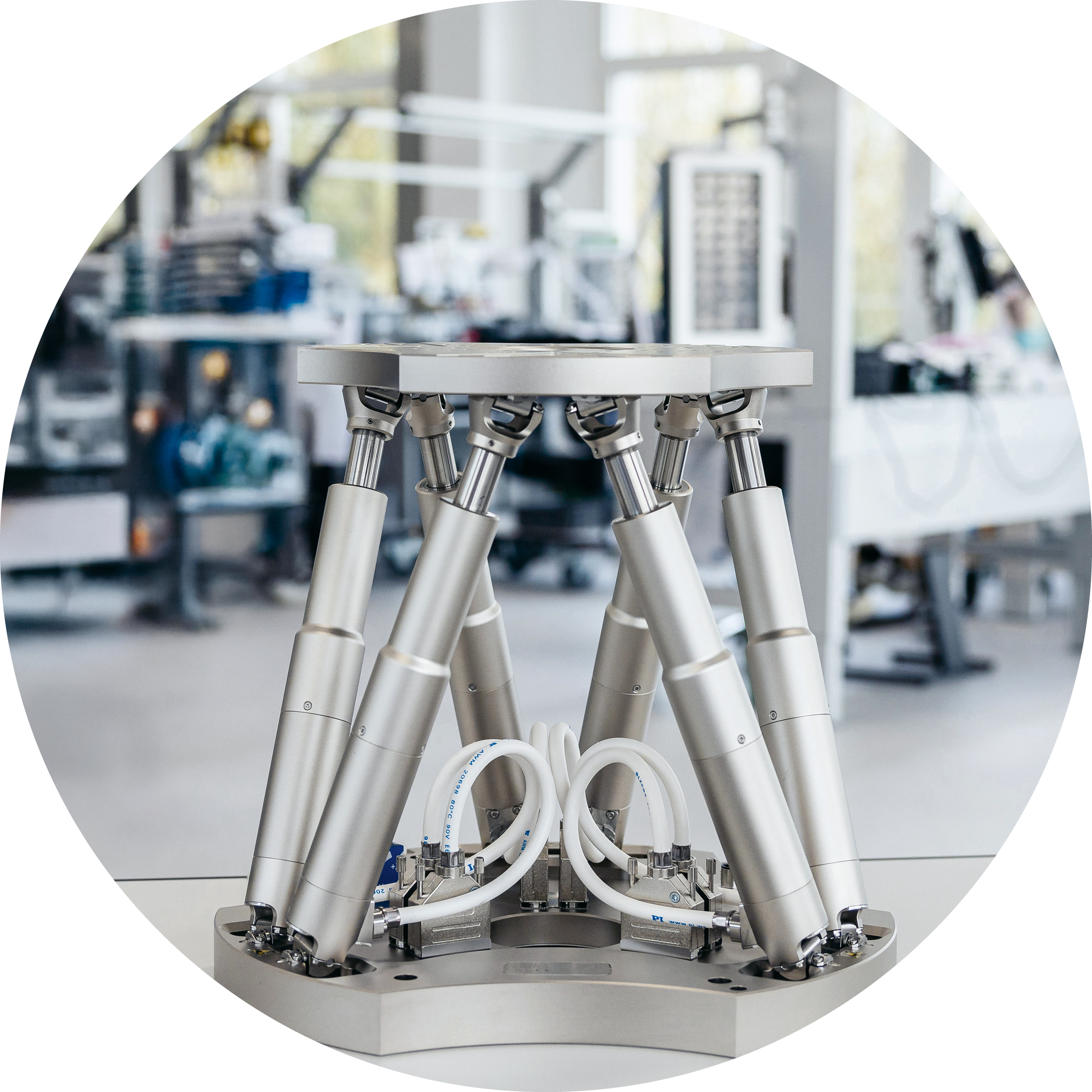
Piezoelectric effect: Under electrical voltage, piezo ceramics deform minimally but extremely precisely – ideal for ultra-fast movements in the micro- and nanometer range.
Nanopositioning: Whether in chip manufacturing or microscopy – here, every nanometer determines quality, resolution, or yield.
Hybrid drives: The combination of classic motor spindle axes and piezo technology combines speed with fine positioning.
ACS Motion Control: Sophisticated algorithms ensure that even complex multi-axis movements are executed accurately, quickly, and with repeatable precision.
Precision technology from PI helps to push the boundaries of what is possible
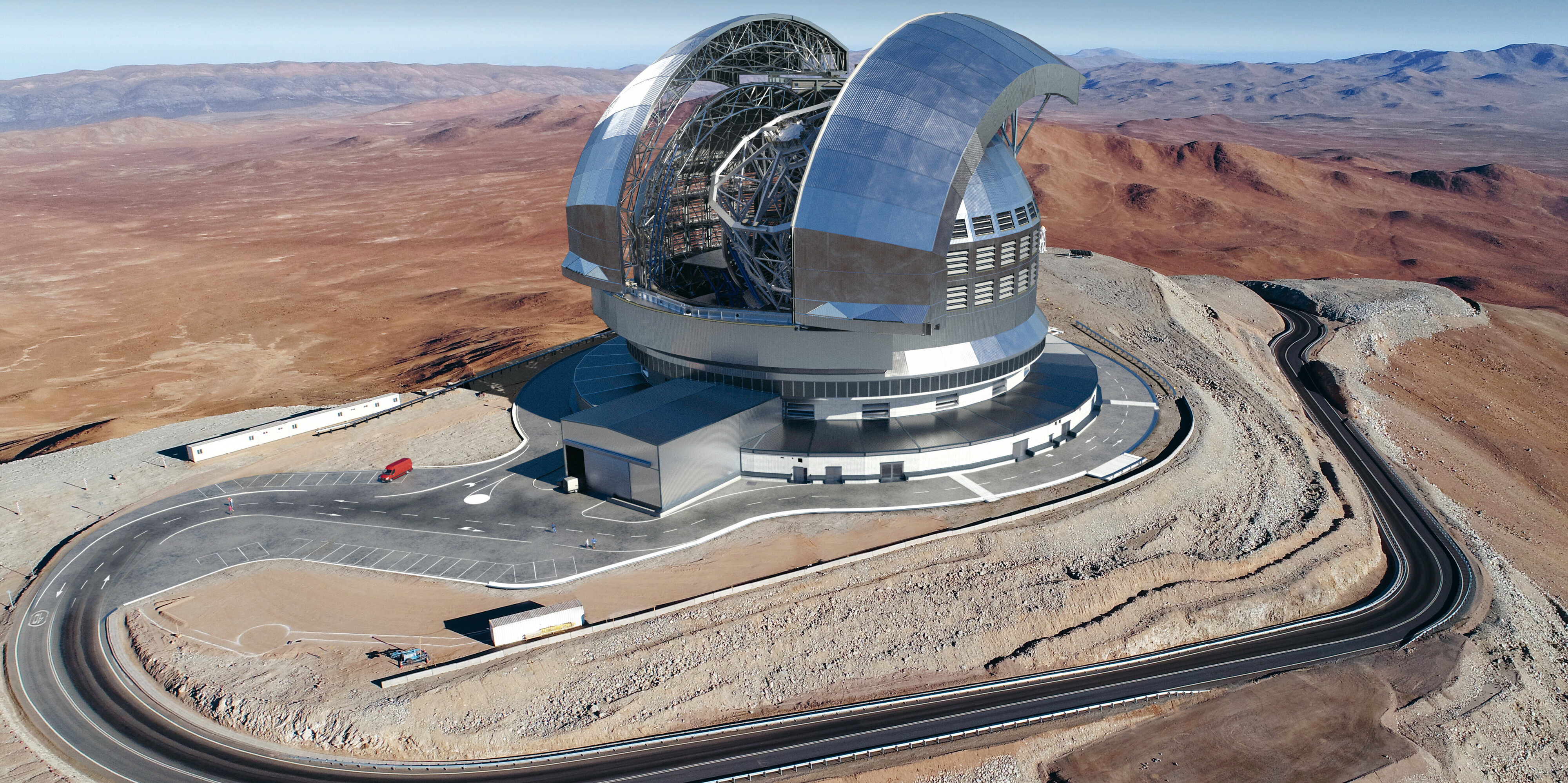
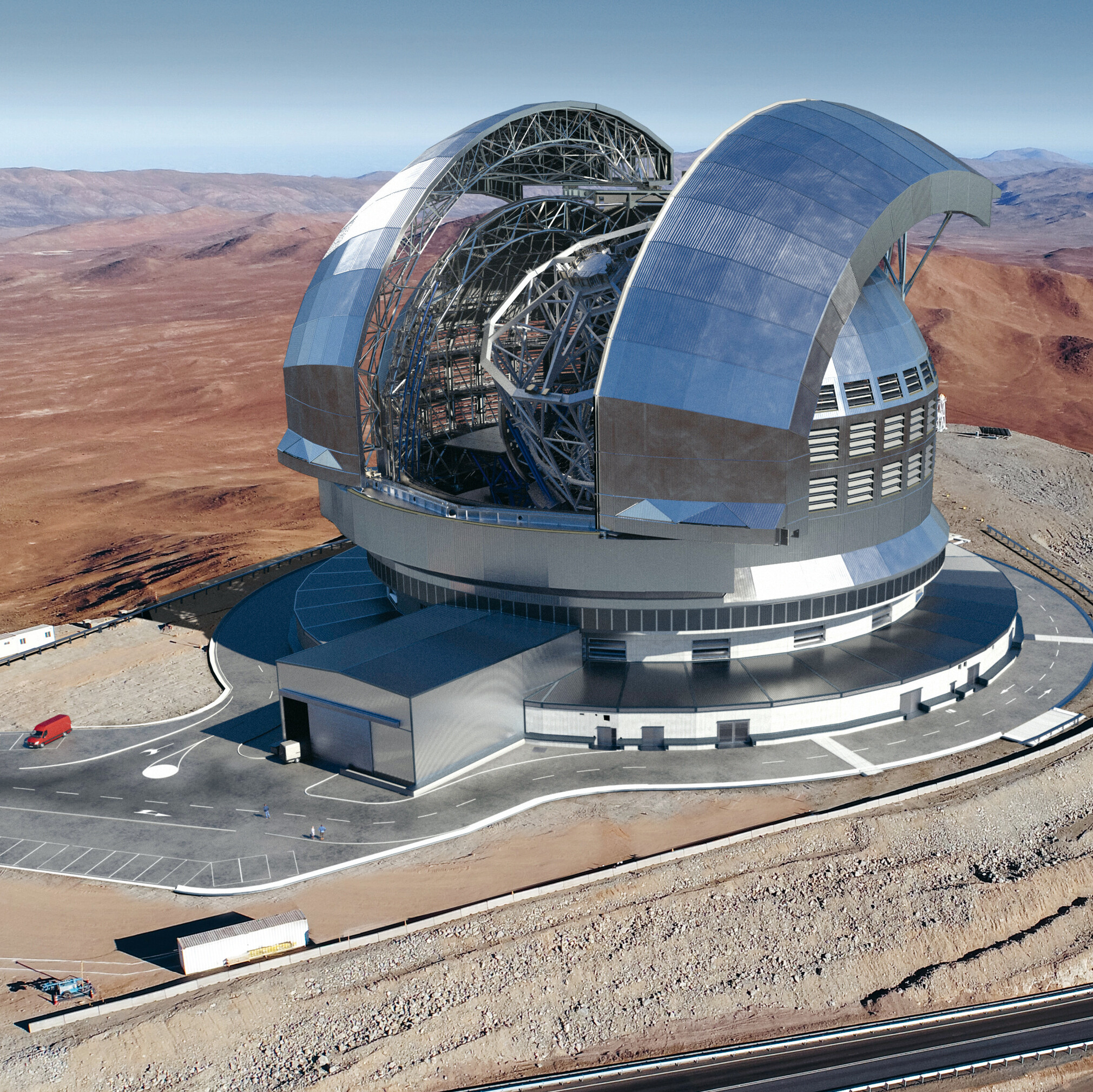
Space fascinates mankind. The question of whether we are alone in the universe occupies researchers and society. Answers to questions like these are to be provided by the ELT (Extremely Large Telescope), the largest ground-based telescope of the European Southern Observatory (ESO). PI is also supporting this innovative research project. The company supplied the ESO with 2,500 customized hybrid actuators. The nano-positioners, which were specially designed for the project, meet unprecedented requirements: the most adverse environmental conditions, high gravitational loads, and long-term reliability.
The ELT, currently under construction at an altitude of 3,046 meters in Chile’s Atacama Desert, is the most innovative telescope of its kind. With a segmented primary mirror measuring 39 meters in diameter and a light-collecting area of almost 1,000 m², the telescope is designed to detect electromagnetic radiation in the visible and near-infrared wavelength range, enabling research into planets outside our solar system. To do this, 798 hexagonal mirror segments, each 1.40 meters in diameter and weighing 250 kg, must be aligned so precisely with each other that imaging errors are avoided. This high-precision task is performed by hybrid actuators from PI, which were specially developed for the project. They position the heavy mirror segments, control their position, and correct deformations in the nanometer range caused by gravity, temperature, and wind.
The hybrid drive designed by PI, which combines motor-spindle drives with piezo actuators, achieves a movement accuracy of better than 2 nm, large travel ranges of up to 10 mm, and moves loads with up to 463 N tensile force and 1,050 N compressive force. To align with different objects, speeds of 2 nanometers per second up to 100 micrometers per second are achieved. This allows inaccuracies caused by environmental influences such as gravity, thermal effects, or wind load to be automatically compensated.
Lorenzo Pettazzi, ELT M1 PACT Contract Manager at ESO, is enthusiastic: “The ELT project requires unique expertise in various fields of science and technology, as well as experience, perseverance, and a team of dedicated people who are driven by the idea of creating something greater than themselves. We thank PI for their know-how and their customized innovative solution for space exploration.”
Since 2014, around 750 employees from 30 different countries have been planning and implementing the construction of the telescope. At PI, the project was implemented from June 2017 to June 2025. Right up to “First Light” at the end of 2030, the project will continue to set further technological milestones and advance scientific research.
„The ELT project requires a dedicated team of people who are driven by the idea of creating something greater than themselves.“
ESO
The revolution in our high-tech world is taking place in secret – in spaces so small that they can only be measured in nanometers. This is precisely where Physik Instrumente (PI) comes in. From the first laser cut of a smartphone display to the historic image of a black hole, PI enables precision without which modern technologies would be unthinkable. What began in 1970 as a visionary spin-off from a research institute is now a global network for precision motion, leading science and industry into the future.
Modern devices are becoming smaller, more powerful, and more versatile. Behind many of these developments is a technology that hardly anyone sees, but whose impact is felt worldwide: precision positioning in the micro- and nanometer range. The Karlsruhe-based company Physik Instrumente (PI) has been one of the leading forces in this field for decades – as a global technology leader for ultra-precise motion systems and piezo technology. PI delivers solutions that are indispensable in future-oriented industries such as the semiconductor industry, photonics, medical technology, and aerospace.
A passion for precision – a founding story with family values
The history of PI begins in 1970: Physicist Dr. Karl Spanner pursued his vision at the Max Planck Institute for Quantum Optics in Garching, Germany, of making scientific precision usable in industry. Together with Professor Bardocz and other partners, he founded a company that was small at first, but from the very beginning pursued an extraordinary goal: to be able to reliably control movements in the nanometer range.
Over the years, PI has developed into one of the world’s leading specialists in precision positioning technology and piezo technology. Today, the family business is run by second-generation CEO Markus Spanner. The corporate culture continues to be characterized by a spirit of research, responsibility, and a firm belief that precision is the basis for many future technologies.
Global presence, technological depth, and a strong network
Today, PI is globally anchored and yet firmly rooted in Karlsruhe. Around 1,900 employees, nine production sites in Europe, North America, and Asia, and 16 sales and service branches form an international network that reaches customers in all relevant high-tech markets.
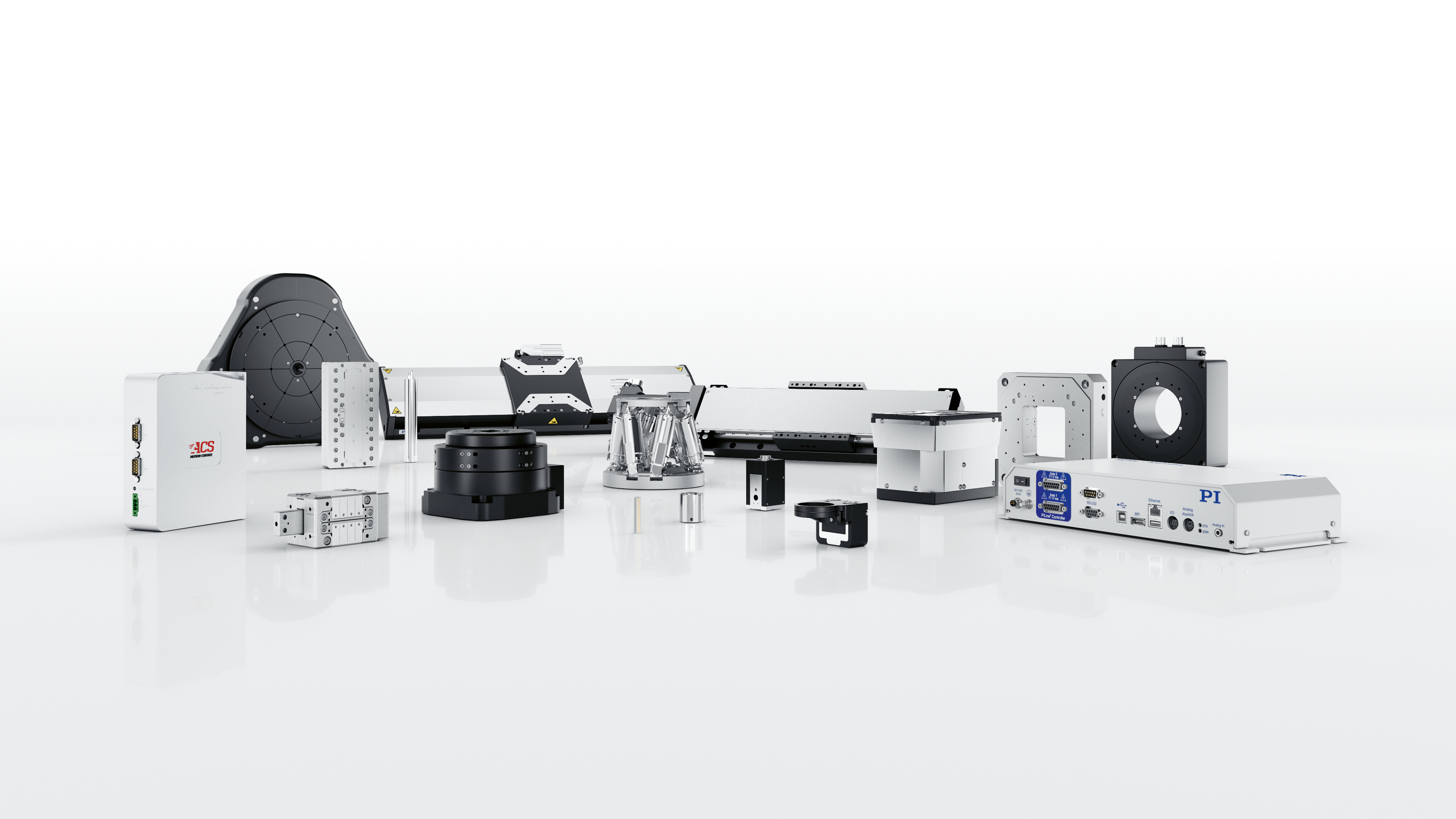
The company’s success is based on an exceptional range of technologies: PI develops and manufactures almost all core technologies itself – from mechanics, drive technology, and sensor technology to controllers, algorithms, and its own piezoceramics. This vertical integration makes PI independent, flexible, and a sought-after partner in demanding markets. Two specialized divisions are central components of this structure: PI Ceramic and ACS Motion Control.
Since 1992, PI Ceramic, based in Lederhose, has been one of the world’s leading manufacturers of piezoceramics. The materials developed there form the heart of many of PI’s ultra-fast and high-precision drive systems. Complete control over the material – from raw ceramics to the finished component – enables exceptional performance, stability, and longevity.
With ACS Motion Control in Israel, PI has had a center of excellence for high-performance motion control since 2017. ACS develops precise multi-axis controllers and algorithms that enable complex motion tasks in the nanometer range. Together, PI and ACS form an integrated system of mechanics, sensor technology, and intelligent control – and thus deliver turnkey high-end solutions from a single source.
Precision as the foundation of the future
Whether in semiconductor manufacturing, photonics, biotechnology, or in orbit: PI makes processes possible that would be unthinkable without high-precision motion. The company shows how scientific vision becomes industrial reality – and how technological excellence begins in Karlsruhe but has a global impact. PI is therefore not only a supplier to high-tech markets, but also a key designer of tomorrow’s technologies.